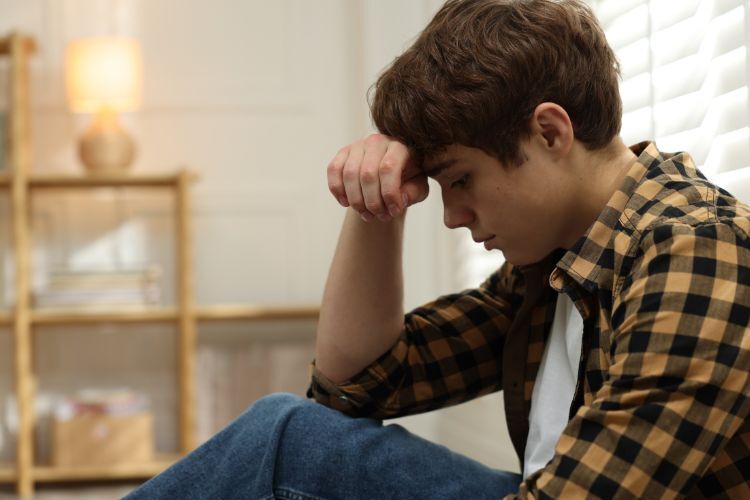
If your teenager suddenly avoids parties, dreads school, or spends more time in their room than with friends, you might be watching teen social anxiety take hold. It's one of the most common struggles we see in adolescence, and it's also one of the hardest for parents to talk about with their kids. Teens often can't explain why a hallway conversation feels terrifying or why they'd rather skip lunch than sit with classmates. Art therapy gives them another way in, one that doesn't require the exact right words right away.
At Recreating Dawn in Lakewood, OH, our team works with teens and families across the Cleveland area who are trying to make sense of this exact thing. Here's what social anxiety can look like, why talking about it isn't always the fastest path forward, and how art therapy helps teens build real confidence.
What Teen Social Anxiety Actually Looks Like
Social anxiety in teenagers rarely shows up as a clear announcement. It shows up as patterns parents notice over time:
- Stomachaches or headaches before school events, group projects, or parties
- Avoiding eye contact, texting instead of calling, or going quiet in group settings
- Skipping activities they used to enjoy once other people are involved
- Overthinking conversations for hours afterward, replaying every word
- Irritability or shutting down when asked to talk about their day
None of this means something is wrong with your teen. Adolescence already asks a lot of a developing brain, and social anxiety just turns the volume way up on normal teenage self-consciousness. The good news is that with the right support, teens genuinely get better at this.
Why Talking It Out Isn't Always Enough
Traditional talk therapy works well for a lot of teens, but it has a built-in challenge: it asks an anxious teen to sit across from an adult and talk about the very thing that makes them anxious in the first place. For a teen who already feels judged or exposed in social situations, that setup can feel like more pressure, not less.
This is where art therapy changes the equation. Instead of asking a teen to explain their anxiety out loud, an art therapist gives them materials, a little structure, and room to show what's going on. A drawing of a their inner "stress monster," a collage about what confidence would feel like, or even a simple doodle done while talking can open a door that a direct question never would.
How Art Therapy Helps With Social Anxiety
Art therapy works with social anxiety in a few specific ways.
It lowers the pressure to perform. There's no right or wrong way to draw a feeling. That alone takes the spotlight off the teen and puts it on the process, which is often the first time in weeks they've felt anything other than watched.
It gives anxious thoughts a shape. Teens with social anxiety often carry a running loop of "what if I embarrass myself" or "what if they don't like me." Turning that loop into an image on paper makes it something they can look at, talk about, and eventually change, rather than something stuck on repeat in their head.
It builds a skill they can use outside sessions. Learning to notice and name a feeling through art carries over into real life. A teen who's practiced identifying "this is the tight, buzzing feeling before I have to talk in class" has language and awareness they didn't have before, and that awareness is often the first step toward managing the anxiety itself.
It works at the teen's pace. Nobody is pushed to share more than they're ready to. Sessions can be quiet and mostly creative for a while, and that's fine. Trust builds first, and openness tends to follow naturally after that.
What a Session Actually Looks Like
A typical art therapy session for teen social anxiety is 50 to 60 minutes, one on one with a licensed therapist. There's no pressure to produce anything polished. Materials might include markers, paint, clay, or collage supplies, chosen based on what the teen responds to. Early sessions usually focus on building comfort and safety. From there, the therapist and teen work together on specific situations, like a group project, a lunch table, or a social event, using art to explore what makes those moments hard and what might make them easier.
Parents are kept in the loop in a way that respects the teen's privacy while still supporting progress at home. It's a partnership, not a black box.
A Familiar Story
Consider a teenager who used to love school and suddenly starts asking to be homeschooled. Nothing dramatic has happened. They just can't shake the fear that people are watching and judging every move they make in the hallway, feeling left out. After a few sessions of art therapy, drawing rather than explaining, that teen might identify the exact moment their anxiety spikes, right before walking into a crowded classroom. From there, they start building small, manageable strategies, practiced first on paper, then in real hallways. This kind of shift is common, and it's a big part of why our therapists keep coming back to art therapy for teens who feel stuck.
Organizations like the Child Mind Institute and the Anxiety and Depression Association of America both point to creative, low-pressure approaches as effective ways to reach anxious teens who struggle with more traditional talk-based formats. It's not a replacement for good clinical care, it's a way to make that care land for a teen who isn't ready to just talk it out.
Signs It Might Be Time to Reach Out
Every teen has an off day, so it helps to know what's worth a closer look. Consider reaching out if you're noticing several of these at once, especially if they're lasting more than a few weeks: your teen is turning down invitations they once looked forward to, grades are slipping because they're avoiding group work or presentations, physical symptoms like stomachaches show up mainly around social situations, or your teen has started saying things like "everyone's judging me" or "I just can't do it" on a regular basis. None of these on their own is a red flag, but together they're worth a conversation, and possibly a consultation.
Getting Started
If your teen is showing signs of social anxiety, you don't have to figure this out alone, and neither do they. Our team at Recreating Dawn, including therapists trained specifically in art therapy for teens and younger clients, offers reduced rates for teen sessions and works with families throughout Lakewood, Cleveland, and the surrounding Ohio area. Every teen connects with a therapist who fits their personality and pace, not a one-size-fits-all approach.
Ready to explore whether art therapy is the right fit for your teen? Reach out to schedule an initial consultation and we'll help match your teen with the right therapist on our team.
